If you run a BPO, quality reporting is part of the product you sell. The client sees a monthly slide with a quality score, an average handle time and a few charts, and then asks the same questions every month. How many calls did you actually review? Why did the score drop? Can I hear one of the calls? Who decided that was a fail?
A report that answers those questions before they are asked builds trust, shortens review meetings and makes renewals easier. This article describes what such a report contains, how to structure the work around client programs, and how to calibrate with the client so the numbers mean the same thing to both sides.
Why client reports lose arguments
Most reports fail in one of four ways:
- The sample is small and unexplained. “We reviewed 5 calls per agent” invites the reply “and the other 995?”.
- The score is a black box. A single number with no link to the calls behind it cannot be challenged constructively, so it gets rejected.
- The criteria are yours, not the client's. If the scorecard measures what your company cares about, the client sees a report about your process, not their customers.
- The report is late and hand-made. Built from spreadsheets over several days, it describes last month in the middle of this one, and nobody can reproduce it.
All four are fixed by the same principle: let every statement in the report point to something the client can inspect.
Organize by program, not by agent pool
Agents often work across programs, but clients care about their own. Set up quality work per client program:
- Its own scorecard. Built from the client's criteria and call types. A retailer's returns policy and a subscription service's cancellation rules are different items with different weights. See how to build a scorecard that can be scored fairly.
- Its own topics. Reasons for calling in the client's words, so findings read like their business.
- Its own access. Each client should see only its own calls, and you should be able to say how that separation is enforced, not just promise it.
- Its own history. Scorecard versions and results kept per program, so a change in criteria in March does not silently rewrite February.
On the platform side, VoiceVera uses one workspace per client program, with separate users, scorecards, topics and review rules. The BPO solutions page describes the setup.
What “evidence” means in a client report
Three kinds of evidence turn a report from assertions into something checkable:
- Coverage. State how many calls were received, how many were analyzed, and how many were skipped and why (abandoned, voicemail, too short). A gap that is visible and explained is credible. A gap that is hidden is not.
- Quotes with moments. Every failed item and every highlighted success comes with the sentence that was said and the second it happened, with a link that plays it. This is the difference between “the agent did not verify the customer” and a clip the client can hear in ten seconds. We cover the reasoning in Why every AI finding needs a quote and a timestamp.
- Traceable numbers. Every figure in the report is computed from the data by code, never typed in by hand or written by a language model, so two people regenerating the report get the same numbers.
A monthly client report template
A good monthly report is short enough to read in ten minutes and structured so each section answers one question:
| Section | Question it answers | What goes in it |
|---|---|---|
| 1. Summary | How did the month go? | Three to five sentences, the key movements versus last month, and the one decision you need from the client. |
| 2. Coverage | What did we look at? | Calls received, calls analyzed, calls skipped, with reasons. Scorecard version in use. |
| 3. Quality scorecard | How well were calls handled against your criteria? | Score for the program, broken down by item and by call type. The items that moved, with two or three example clips each. |
| 4. Zero-tolerance items | Did anything critical happen? | Every miss listed with its quote and what was done about it. If none, say so. |
| 5. Why customers called | What are your customers telling us? | Top reasons, change versus last month, and the reasons that are growing. |
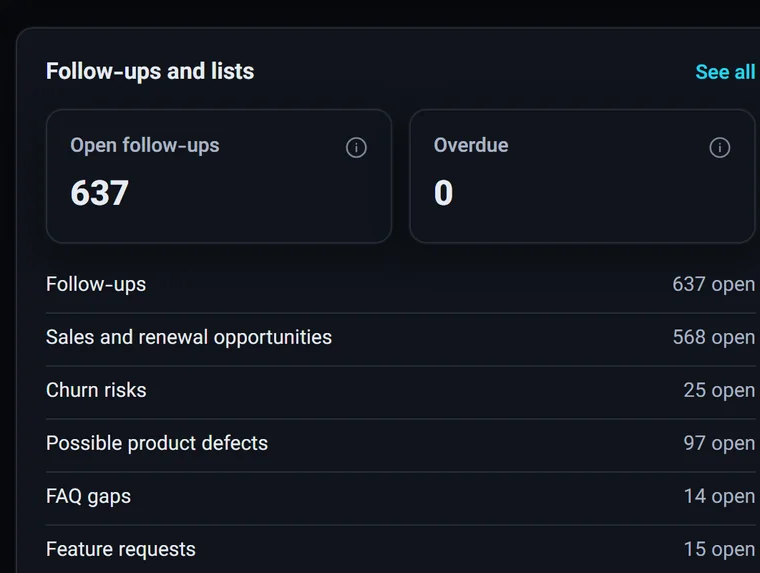
| 6. Customer experience and outcomes | How did calls end? | Resolution, follow-ups needed, complaints, churn risks, each with example quotes. |
| 7. Issues for the client | What is outside our control? | Product defects, policy gaps and FAQ gaps from the client's side, with customer quotes. This section is often the most valued. |
| 8. Actions | What happens next month? | Coaching focus, scorecard changes proposed, owners and dates, plus status of last month's actions. |
Two details make this work. First, section 7 turns the report from a defense into a service: you are telling the client things about their own business they could not see. Second, section 8 closes the loop. Reports that never mention last month's actions teach clients to stop reading them.
Calibrate with the client
Even the best scorecard fails if you and the client read an item differently. Calibration is the routine that keeps the two aligned:
- Pick a set of calls together. Twenty is enough to start: a mix of passes, fails and borderline cases.
- Score them independently. Your QA lead and a client representative each score the calls without seeing each other's answers. Add the automated score alongside.
- Compare, item by item. Disagreements are the point. Each one is either a wording problem in the criterion, a missing exception or a real difference in expectations.
- Fix the criterion, not the score. Reword the item, add a “not applicable” case or split it in two. Record the change as a new scorecard version, approved by both sides.
- Repeat on a schedule. Quarterly is common, and also after any policy change on the client's side.
Calibration also gives you a defensible answer when the client disputes a score: here is the version of the criterion you approved, here is the quote, here is how the same call was scored by a person.
Keep agents in the loop
A report for the client is also a report about your people. Agents should see the same evidence the client sees, be able to dispute a score and get coaching from clips of their own calls. Agents who trust the scoring are easier to coach than agents who feel audited, and the disputes you resolve become the best input to the next calibration. Score only what an agent does, never mood or feelings.
Getting started with one program
- Pick the client with the most scrutiny, or the one where the next renewal is closest.
- Write the scorecard from their criteria, with objective wording for each item.
- Analyze a month of that program's calls and read the failed items yourself before the client does.
- Build the report from the template above and walk the client through two or three clips.
- Agree the calibration routine and the first set of calls.
A report like this also lifts the work of the quality team. When QA is done on every call with evidence, analysts spend their time on calibration, coaching and the ambiguous cases rather than on filling in forms and assembling slides.
Pilot it on one client program
Pick a program. We show you the scorecard, the lists and the monthly report you could share with that client.